

Crypto Wallet Screening for Compliance Teams
Wallet screening asks one question about a crypto address: what has it been close to? AMLOfficer screens an address against four AML data providers at once and returns a single risk picture — in the dashboard, in your team's Telegram group, or inside your own systems.
Open Business AccountScreening runs inside the AMLOfficer application, so a business account is the first step. What you pay depends on your volumes and is shown in your account after registration.
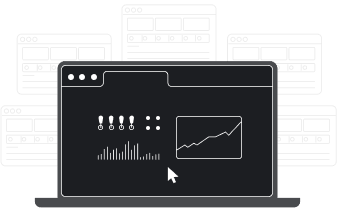
What wallet screening is
Every crypto address carries a public history, and that history is the only thing you can examine before you deal with the person behind it. Wallet screening reads that history through AML data providers and turns it into something a compliance team can act on: an assessment of the risk the address is exposed to, and the flows it took part in.
The result describes an address, not a person. It tells you what the funds have been near and how much of that exposure would move onto your side if you accept them. That distinction matters in practice, because the moment to weigh an address is while it is still your counterparty's problem rather than an entry in your own ledger.
What comes back on a screened address
- Risk data from several sources at once, rather than the reading of a single vendor you happen to have a contract with.
- History at the depth you choose — incoming funds, outgoing funds, or the address's full transaction history when a shallow look is not enough.
- Counterparty exposure — the flows the address has been part of, which is what pre-trade and pre-settlement due diligence actually turns on.
- A wallet compliance report you can keep, so the reasoning behind a decision survives the day it was made and can be produced later.
- The option to keep the address under automated watch instead of screening it by hand every time it comes back.
What screening does not do is name the owner of an address. It works on the blockchain side of the picture; establishing who your customer is stays with the identity checks you run elsewhere.
Screening an address, checking a transfer, watching a wallet
These three are often sold as one thing, and treating them as one is how teams end up with gaps. They differ in what you are asking about.
A one-off check
One question about one transfer or one address, answered once. Enough for a counterparty you will never see again.
Wallet screening
The address itself is the subject, examined to the depth the decision deserves. This is what you run when the counterparty, not a single payment, is what you are deciding about.
Continuous monitoring
The address stays under watch after the answer, and the platform comes back to you when its activity changes rather than waiting to be asked again.
In AMLOfficer they are the same workflow at different settings: an address you screened once can be handed over to automated real-time monitoring without being re-entered anywhere.
Four AML data providers behind one screening request
AML providers do not work from identical datasets. An address that looks unremarkable to one of them can carry a flag with another, and a screening result built on a single source quietly inherits that source's blind spots along with its coverage.
AMLOfficer aggregates four AML data providers, including BitOK, Global Ledger and Beosin, and one screening request reaches all of them. Where they differ, your team sees the difference and decides what to do with it — which is a better position than never learning that a second opinion existed.
Where screening actually happens
In the dashboard
Add an address, choose the scope, read the report and keep it. Colleagues you invite work on the same wallets under their own roles.
In Telegram
Generate a wallet compliance report and receive alerts in a few taps, including notifications to the group chat your compliance and operations people already share.
Through the API
Screen an address at the point where your own product makes the decision, and pull AML data into your systems in real time for advanced use cases.
The moments a team screens an address
Screening earns its place at the points where something is about to become irreversible.
Before a deposit is credited
The sending address is screened while the funds are still unaccepted, so a risky deposit is a question rather than a balance you now have to explain.
Before a payout leaves
Withdrawal destinations get the same treatment as incoming funds, because where your assets go is part of your exposure too.
Before an OTC settlement
Large trades are the classic case for looking at a counterparty's transaction history in full rather than at the single transfer in front of you.
When onboarding a counterparty
A merchant, a partner or a client wallet is screened once at the start and then kept under watch, so the relationship is reviewed rather than assumed.
When an address turns into a case
Once something has gone wrong, screening becomes evidence work: the reports behind an address are what a documented answer to a regulator or a law-enforcement request is built from, and shared access lets more than one analyst work the same wallet.
Screening is one part of a compliance stack
On its own, screening answers questions one address at a time. It becomes a control when it sits next to ongoing monitoring, alerts that reach the right people, roles for the team and a record that survives an audit. If that is the picture you are assembling, the AML compliance software overview describes how the whole platform fits together.
Wallet screening: common questions
What is crypto wallet screening?
It is the assessment of a crypto address against AML data: what its funds have been exposed to, and which flows it has taken part in. The output is a risk picture of the address that a compliance team uses to decide whether to accept, delay or refuse a transaction.
How is screening different from transaction monitoring?
Screening is something you do to an address at a chosen moment. Monitoring is what keeps happening to it afterwards — the wallet stays under watch and the platform raises an alert when its activity changes. Most teams need both, and in AMLOfficer a screened address can be moved onto automated monitoring directly.
Which data stands behind a screening result?
AMLOfficer aggregates four AML data providers, including BitOK, Global Ledger and Beosin. A single request goes out to all of them, so the result is not limited to one provider's view of the address.
Can we screen wallets from our own system?
Yes. Alongside the dashboard and Telegram, AMLOfficer offers an API: a lighter integration for working with reports from the dashboard, and a path for pulling AML data into your own systems in real time when screening has to happen inside your product.
Do we need an account to screen a wallet?
Yes — screening runs inside the AMLOfficer application, and a business account is what gives your team the dashboard, the Telegram notifications, role management and API access.
Start screening your first wallet
Open a business account, add an address, and invite the colleagues who will work on it with you.
Run a check on a single wallet or transaction and read the result across four AML data providers.
Screening answers for one moment. Monitoring keeps the same wallet under watch and tells you when it changes.
The whole platform behind the screening: checks, monitoring, alerts, team roles and the API.