

Online AML Check for Crypto Wallets and Transactions
An AML check answers one question before you accept crypto: where did these funds come from? AMLOfficer runs that check against four AML data providers at once — including BitOK, Global Ledger and Beosin — and brings the results back into a single dashboard, your Telegram group, or your own systems.
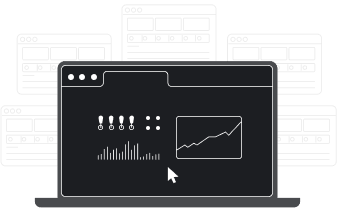
What an AML check is
An AML (anti-money laundering) check examines a crypto address or a transaction against blockchain analytics data and looks for connections to sanctioned entities, darknet markets, mixers, fraud schemes and stolen funds. What comes back is a risk picture of that address — where its funds came from and where they went — not a verdict about a person.
Businesses run these checks for a practical reason: once the funds are on your books, their history becomes your problem. A check before a deposit, a settlement or a payout is the cheapest moment at which you can still say no.
What AMLOfficer checks
- Wallets and addresses — screen a counterparty before you trade, settle or pay out.
- Deposits or withdrawals — narrow the check to the direction of flow that matters for the decision in front of you.
- Full transaction history — when a counterparty deserves a deeper look than a single transfer.
- Wallets you keep watching — the same address can be added once and monitored continuously instead of re-checked by hand.
Four AML data providers behind one check
AMLOfficer aggregates four AML data providers, including BitOK, Global Ledger and Beosin. The point of aggregation is disagreement: providers draw on different datasets, and an address one of them calls clean is regularly flagged by another.
A single-vendor check gives you one opinion about an address. Running the same address through several sources gives you the disagreements as well — and those are exactly the cases a compliance officer wants to see before approving anything. You get that from one account, one interface and one integration, instead of four separate contracts.
When businesses run AML checks
OTC desks
Large-volume trades where the source of a counterparty's funds is not visible. A check before settlement is the due diligence step that makes the trade defensible.
VASPs and crypto exchangers
Incoming assets can carry the history of earlier suspicious activity. Screening deposits keeps that history off your balance and out of your next audit.
Payment and finance teams
Counterparties and asset flows are screened before they reach the books, so a blockchain entity that would disrupt operations is caught early.
Compliance officers
Client and service data scattered across tools makes oversight slow. One place to run checks, keep the reports and hand them to whoever asks next.
Investigations and requests
Regulatory and law-enforcement requests need a structured answer. A saved check with its data sources is a document you can attach, not a screenshot.
Before an integration
Manual checks are also how teams test the data before wiring screening into their own product through the API.
How to run an AML check with AMLOfficer
- 1
Open a business account. Registration is the entry point to the application — checks, reports and plan details live there, not on this page.
- 2
Add the wallet or address. Add wallets manually for one-off checks, or put them under automated monitoring straight away.
- 3
Choose the AML insights you need. Deposits, withdrawals or the full history — the scope of the check is yours to set.
- 4
Read the report where you work. Reports are available in the dashboard, and wallet compliance reports and alerts can be generated directly in Telegram.
- 5
Bring in your team. Invite colleagues, assign roles and keep investigations shared instead of sitting in one person's inbox.
If the decision happens inside your own product — a deposit screen, an onboarding step, a payout queue — the same checks are available through the AMLOfficer AML API, and wallets you want to watch permanently belong in crypto transaction monitoring.
AML checks: common questions
What does an AML check show?
The risk profile of an address or transaction as the AML data providers see it: the sources its funds are connected to and the risk signals attached to them. It is a risk signal for your own decision, not legal advice and not a substitute for your compliance policy.
Why check through several providers?
Because they do not always agree. Providers draw on different datasets, and an address one of them calls clean is regularly flagged by another. AMLOfficer aggregates four of them so the disagreement reaches you instead of being lost.
Do I need an account to run a check?
Yes. Checks run inside the AMLOfficer application, so the first step is to open a business account. This page describes the service; it does not perform the check.
What does an AML check cost?
AMLOfficer works on a pay-as-you-go model, and the terms depend on your volume, so there is no single public price. Your plan is shown in your account after registration.
Can I check an address more than once?
You can re-run a check at any time, but repeated manual checks are usually a sign that the wallet belongs under continuous monitoring, where changes in its activity raise an alert on their own.
Can checks run inside our own system?
Yes — the same checks are available through the API, which is how teams embed screening in an existing onboarding, deposit or payout flow.
Start checking wallets with AMLOfficer
Open a business account to run AML checks across four data providers, invite your team and keep the reports in one place.
Keep the wallets you have already checked under continuous watch, with alerts when their activity changes.
Run the same checks from inside your own product — one integration instead of four provider contracts.
The address-level view of the same data: what a wallet has been close to, and how that verdict is reached.
How a desk fits a counterparty check between the quote and the settlement, without slowing the trade down.
Pro, Corporate and Enterprise plans, each with all four AML providers through one integration; per-report rates appear in your account after registration.